Tag: Global Armwrestling

VIDEO: THE RISE OF DENIS CYPLENKOV

One of the strongest armwrestlers in history Denis Cyplenkov (Денис Цыпленков). He has amazing rivalries starting with John Brzenk, Andrey Pushkar, Dave Chaffee , Michael Todd and maybe at the end of 2018 armwrestling world will finally see match against Devon Larratt.

https://youtu.be/XnWazY_Ohv8

VIDEO: RISE OF LEVAN SAGINASHVILI (ARMWRESTLING HIGHLIGHTS 2014-2017)

Levan Saginashvili has had his ups and downs while climbing his way to the top but this Georgian Hulk has improved every step of the way. In 2018 we expect that Levan Saginashvili will make armwrestling history and show great armwrestling against strongest arm wrestlers in the world.

https://youtu.be/fcjJYsKY84o

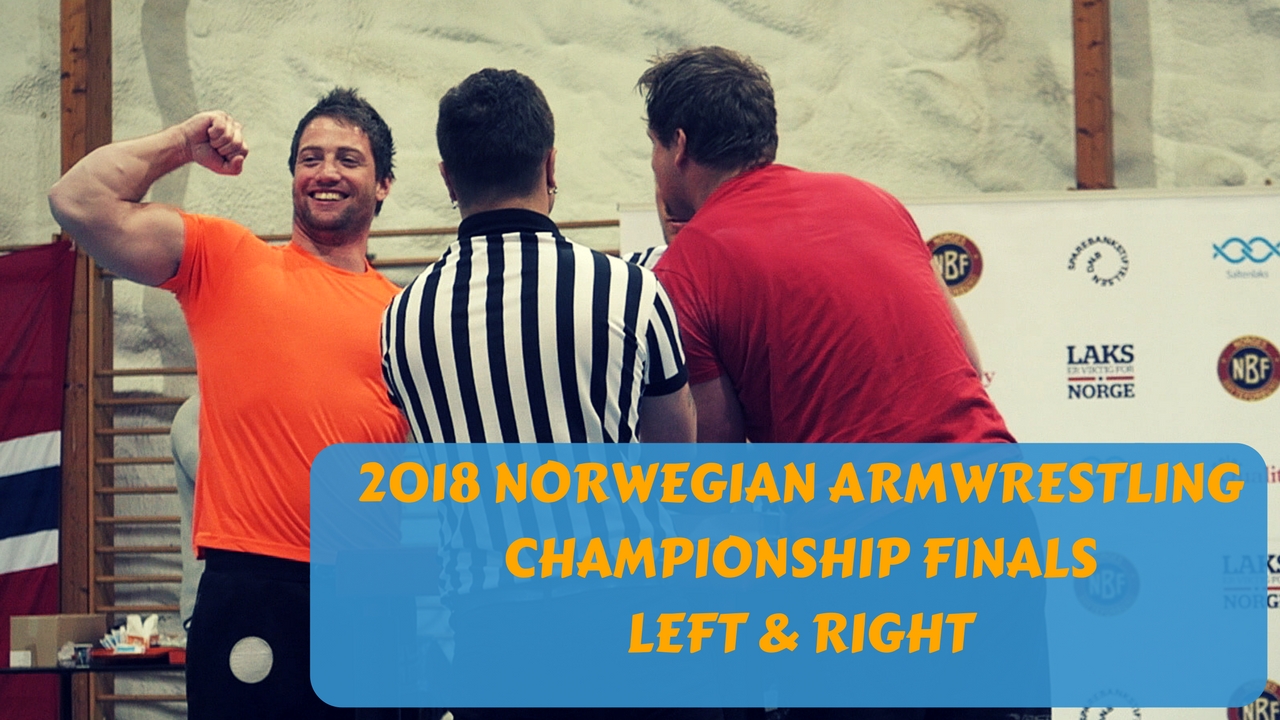
VIDEOS: Norwegian Arm Wrestling Championship 2018 LEFT & RIGHT HAND

Norwegian Arm Wrestling Championship 2018

Biggest name of this Championship was Frode Veim Haughland who competed in +105 kg category and won both arms with body weight ~90 kg. Event featured a lot of great armwrestlers who will make their country proud in this years European and World Arm wrestling Championship.

LEFT HAND VIDEO

https://www.youtube.com/watch?v=RvekefYSGlg

RIGHT HAND VIDEO

https://www.youtube.com/watch?v=ykxI3CdVatg&feature=youtu.be


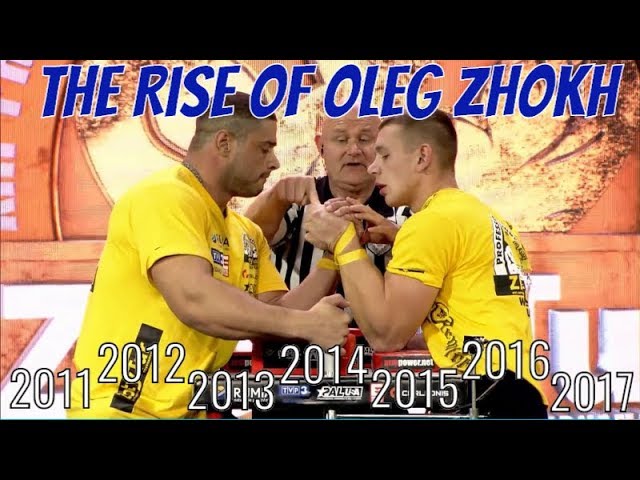
VIDEO: The Rise of Oleg Zhokh (2011-2017)

First video on The Rise of … series.

https://youtu.be/EfQvZJZ7Atw

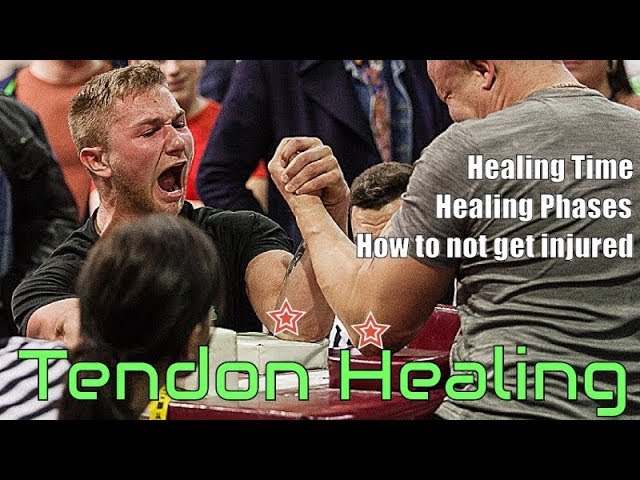
VIDEO: Tendon Healing (How to use tendon healing times in Arm Wrestling)

Tendon Healing

How is Tendinopathy Treated?

In most cases, you can start treating a tendon injury at home. To get the best results, start these steps right away:

  • Rest the painful area, and avoid any activity that makes the pain worse.
  • Apply ice or cold packs for 20 minutes at a time, as often as 2 times an hour, for the first 72 hours. Keep using ice as long as it helps.
  • Do gentle range-of-motion exercises and stretching to prevent stiffness.
  • Have your biomechanics assessed by a sports physiotherapist.
  • Undertake an Eccentric Strengthen Program. This is vital!

Tendon healing process

Tendon healing can be largely divided into 3 overlapping phases, inflammatory repairing and remodelling phases:

The initial inflammatory phase, which lasts about 24 hours, erythrocytes, platelets and inflammatory cells (eg: neutrophils, monocytes and macrophages) migrate to the wound site and clean the site of necrotic materials by phagocytosis.  In the meantime, these cells release phaso active and chemo tactic factors which recruit tendon fibroblast to begin collegan synthesis and deposition.

A few days after the injury, the repairing phase begins.  In this phase, which lasts a few weeks, tendon fibroblast synthesise abundant collegan and other extra cellular matrix components such as proteoglycans and deposit them at the wound site.

After about 6 weeks, the remodelling phase starts.  This phase is characterised by decreased cellularity and decreased collagen and glycosaminoglycan synthesis.  During this period, the repair tissue changes to fibrous tissue, this again changes to scar like tendon tissue after 10 weeks.  During the later remodelling phase covalent bonding between the collagen fibres increases resulting in repaired tissue with highest stiffness and tense our strength.  Also, both the metabolism of tenocytes and tendon vascularity decline.

During tissue healing growth factors play an important role in this process.

1:   Platelet Derived Growth Factor (PDGF) is produced shortly after tendon injury and stimulates the production of other growth factors.

2:  TGF-beta is active during the inflammatory and repair phases of tendon healing.  TGF-beta plays a major role in the repair of injured tendons.  TGF-beta 1 aids an extra cellular matrix deposition; however, it’s over expression results in tissue fibrosis.  TGF-beta 2 functions similarly to TGF-beta 1.  However, TGF-beta 3 has been shown to improve tissue scarring.  Peak levels of TGF-beta receptory expression occur at day 14 post injury and decrease until day 56 post injury.

  1. Vascular Endothelial Growth Factor (VEGF) stimulates endothelial cell proliferation, enhances angiogenesis and increases capillary permeability.  VEGF RNA expression is detected at the repair site 7 days post injury with peak levels at 10 days post injury.
  2. Nitric Oxide Synthase (NOS) isoforms are expressed with differential expression patterns during the 3 phases of tendon healing.

It should be noted that, except for degenerative tendons (tendonosis), injured tendons tend to heal. However, the healing tendon does not reach the biomechanical properties of the tendon prior to surgery.

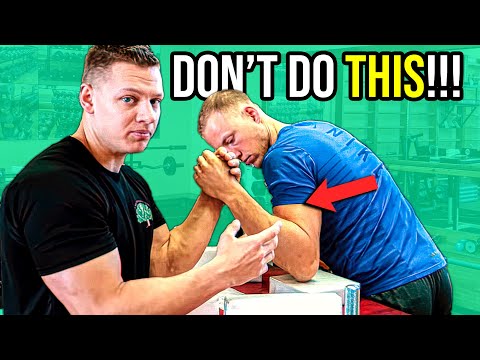
VIDEOS: How to not to break your arm while armwrestling

Subscribe to channel for more armwrestling videos


This is most common place where injuries happen and most common mistake while armwrestling. Tips from pros on how to not get your arm broken in armwrestling.

Down is compilation video on arm breaks in armwrestling. All these arm breaks could have been avoided. Knowing armwrestling technique would decrease your chances of getting injured or your arm broken.

Some things that are common in all theses arm break videos:

– Pushing not Pulling

– Facing away from arm

– Moving Shoulder in front of arm


https://www.youtube.com/watch?v=VRYQf2TNm-w

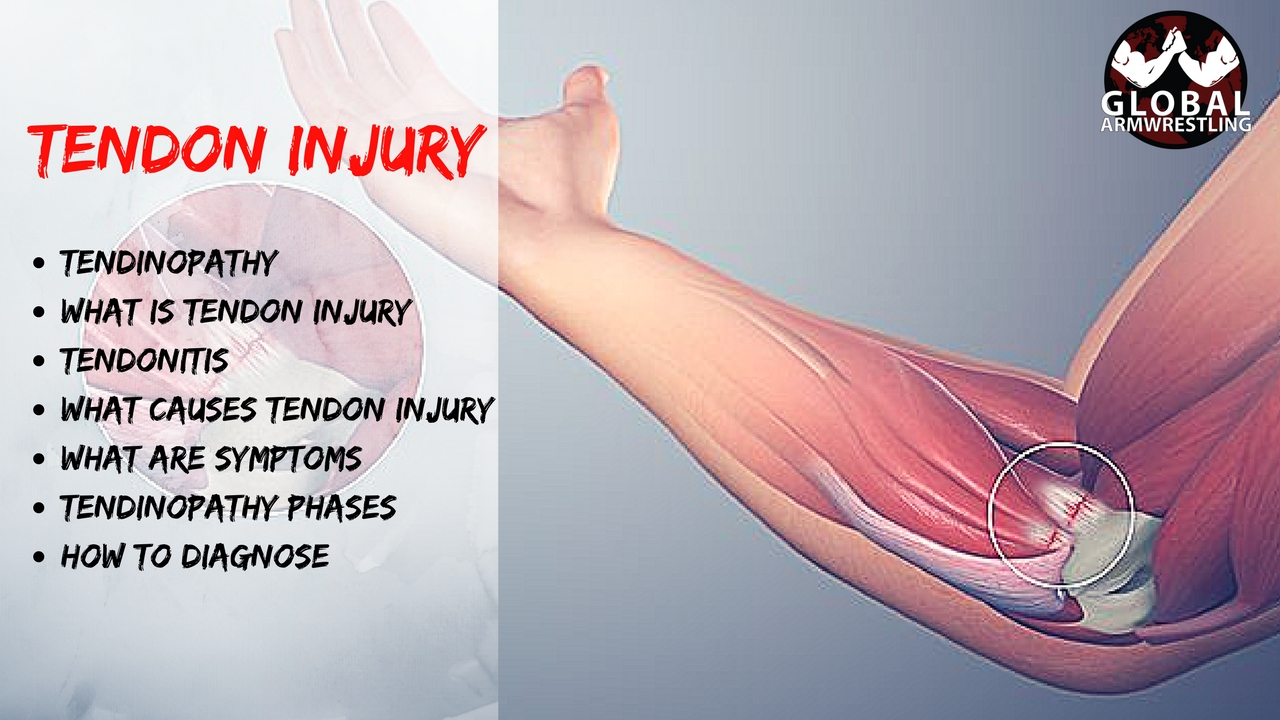
VIDEO: Tendinopathy (Tendon Injury)

Tendinopathy (tendon injuries) can develop in any tendon of the body.

Typically, tendon injuries occur in three areas:

  • musculotendinous junction (where the tendon joins the muscle)
  • mid-tendon (non-insertional tendinopathy)
  • tendon insertion (eg into bone)

Non-insertional tendinopathies tends to be caused by a cumulative microtrauma from repetitive overloading eg overtraining.


What is a Tendon Injury?

Tendons are the tough fibres that connect muscle to bone. Most tendon injuries occur near joints, such as the shoulder, elbow, knee, and ankle. A tendon injury may seem to happen suddenly, but usually, it is the result of repetitive tendon overloading. Health professionals may use different terms to describe a tendon injury. You may hear:

Tendinitis (or Tendonitis): This actually means “inflammation of the tendon,” but inflammation is actually normal tendon healing response which can cause some tendon pain. This is known as the reactive phase and is a good tendon healing response.

The problem really occurs when you healing rate is less than your injury rate – known as tendon dysrepair – which is when tendinopathies can quickly deteriorate into the degenerative (cell death) phase. This is characterized by collagen degeneration in the tendon due to repetitive overloading. These tendinopathies therefore do not respond well to anti-inflammatory treatments and are best treated with functional rehabilitation. The best results occur with early diagnosis and intervention.

What Causes a Tendon Injury?

Most tendon injuries are the result of gradual wear and tear to the tendon from overuse or ageing. Anyone can have a tendon injury, but people who make the same motions over and over in their jobs, sports, or daily activities are more likely to damage a tendon.

Your tendons are designed to withstand high, repetitive loading, however, on occasions, when the load being applied to the tendon is too great for the tendon to withstand, the tendon begins to become stressed.

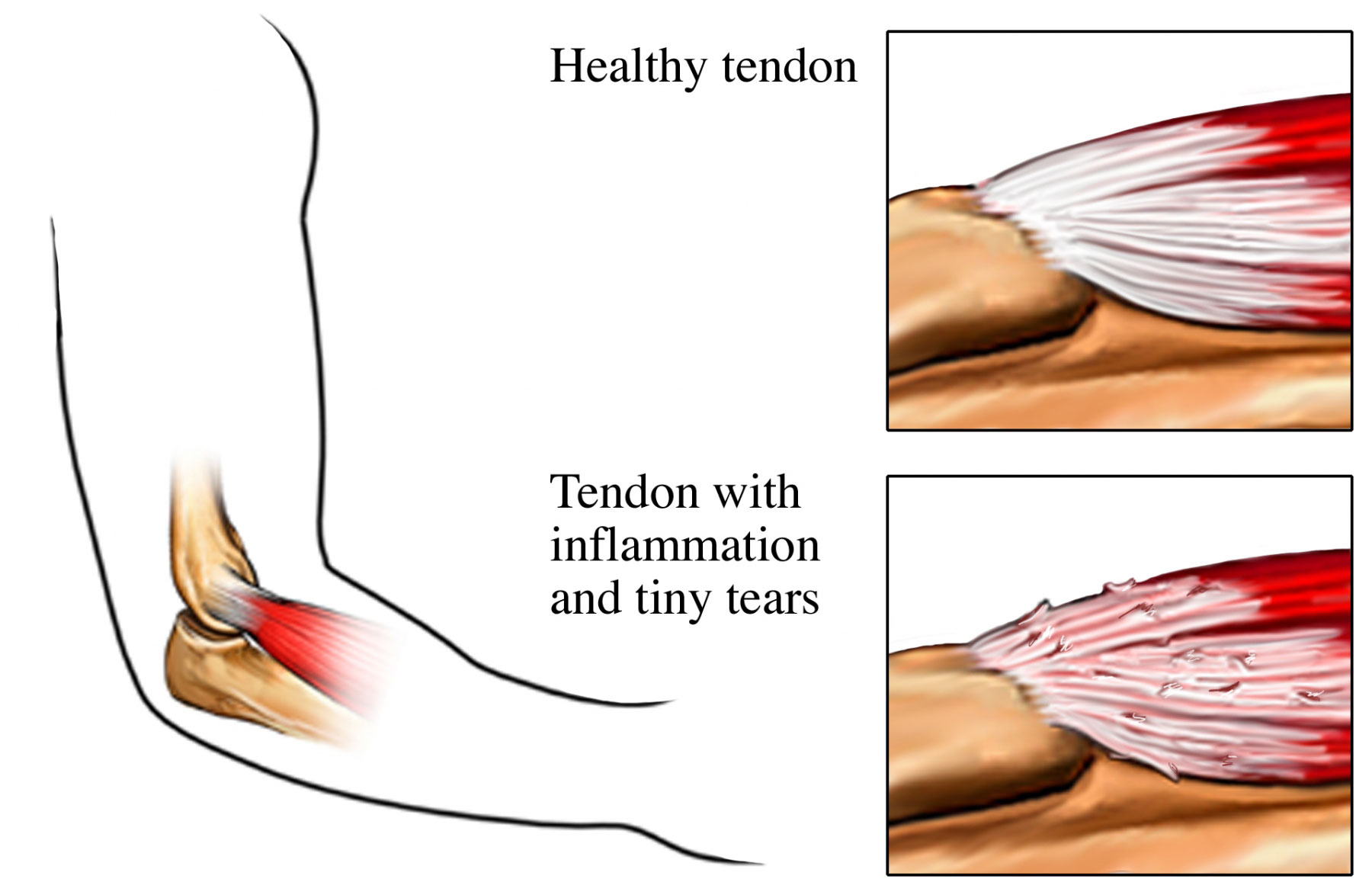
When tendons become stressed, they sustain small micro tears, which encourage inflammatory chemicals and swelling, which can quickly heal if managed appropriately.

However, if the load is continually applied to the tendon, these lesions occurring in the tendon can exceed the rate of repair. The damage will progressively become worse, causing pain and dysfunction. The result is a tendinopathy or tendinosis.

Researchers current opinion implicates the cumulative microtrauma associated with high tensile and compressive forces generated during sport or an activity causes a tendinopathy.

For example, in explosive jumping movements, forces delivered to the patellar tendon can be eight times your body weight. Cumulative micro trauma appears to exceed the tendon’s capacity to heal and remodel.


What are the Symptoms of Tendinopathy?

Tendinopathy usually causes pain, stiffness, and loss of strength in the affected area.

  • The pain may get worse when you use the tendon.
  • You may have more pain and stiffness during the night or when you get up in the morning.
  • The area may be tender, red, warm, or swollen if there is inflammation.
  • You may notice a crunchy sound or feeling when you use the tendon.

The symptoms of a tendon injury can be a lot like those caused by bursitis.

Tendinopathy Phases

The inability of your tendon to adapt to the load quickly enough causes tendon to progress through four phases of tendon injury. While it is healthy for normal tissue adaptation during phase one, further progression can lead to tendon cell death and subsequent tendon rupture.

1. Reactive Tendinopathy

  • Normal tissue adaptation phase
  • Prognosis: Excellent. Normal Recovery!

2. Tendon Dysrepair

  • Injury rate > Repair rate
  • Prognosis: Good. Tissue is attempting to heal.
  • It is vital that you prevent deterioration and progression to permanent cell death (phase 3).

3. Degenerative Tendinopathy

  • Cell death occurs
  • Poor Prognosis – Tendon cells are giving up!

4. Tendon Tear or Rupture

  • Catastrophic tissue breakdown
  • Loss of function.
  • Prognosis: very poor.
  • Surgery is often the only option.

It is very important to have your tendinopathy professionally assessed to identify it’s injury phase. Identifying your tendinopathy phase is also vital to direct your most effective treatment, since certain modalities or exercises should only be applied or undertaken in specific tendon healing phases.

How is a Tendon Injury Diagnosed?

To diagnose a tendon injury, your physiotherapist will ask questions about your past health, your symptoms and exercise regime. They’ll then do a physical examination to confirm the diagnosis. If your symptoms are severe or you do not improve with early treatment, specific diagnostic tests may be requested, such as an ultrasound scan or MRI.

For more Armwrestling videos click this button:

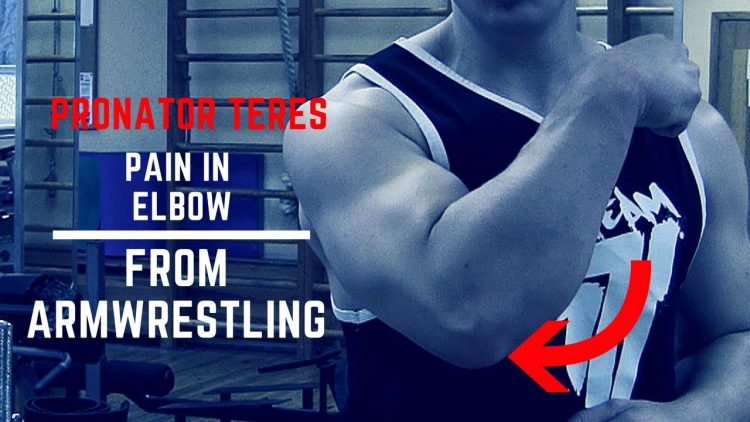
VIDEO: Get rid of Elbow Pain – Release Pronator Teres Muscle

Pain in elbow from armwrestling movements is nothing new. We all have experienced different kind of pain in elbow joint sometimes it`s tendons but sometimes its one or many of muscles involved in movement. With this video we are starting series that focus on things that could cause pain in elbow. Today we are talking about muscle named Pronator Teres. it`s main function is to pronate arm and flex elbow. Sometimes from all pronation and elbow flexion this muscle can get tight and shorten what you need to do is to release it with trigger point active release techniques. you need to release it. It can cause pain in medial epicondylus and in muscles surrounding your elbow, also numbness in fingers. All symptomes can cause something called Pronator Teres Syndrome. 

Pronator teres syndrome

Pronator teres syndrome is a compression neuropathy of the median nerve at the elbow. It is rare compared to compression at the wrist (carpal tunnel syndrome) or isolated injury of the anterior interosseous branch of the median nerve (anterior interosseous syndrome).

The most common cause is entrapment of the median nerve between the two heads of the pronator teres muscle. Other causes are compression of the nerve from the fibrous arch of the flexor superficialis, or the thickening of the bicipital aponeurosis.

The median nerve passes through the cubital fossa and passes between the two heads of pronator teres muscle into the forearm. It then runs between flexor digitorum superficialis and flexor digitorum profundus muscles and enters the hand through the carpal tunnel.

Pronator Teres Muscle

The pronator teres has two heads—humeral and ulnar.

The median nerve enters the forearm between the two heads of the muscle, and is separated from the ulnar artery by the ulnar head.

The muscle passes obliquely across the forearm, and ends in a flat tendon, which is inserted into a rough impression at the middle of the lateral surface of the body of the radius, just distal to the insertion of the supinator.

The lateral border of the muscle forms the medial boundary of the triangular hollow known as the cubital fossa, which is situated anterior to the elbow.

Arm Wrestling Muscle

Take a look at the following picture of two men arm wrestling, paying close attention to the position of the forearm of the person who is winning this match.

What Does the Pronator Teres Do?

The name of the pronator teres gives away its function. Pronation refers the inward rotation of a body part towards the middle of the body. Since the pronator teres is located in the forearm, its function is to rotate (pronate) the forearm inward. Think back to the arm wrestling example from the beginning of the lesson; an arm wrestler must internally rotate (pronate) their forearm in order to pin the arm of their opponent.

The pronator teres is not only used during arm wrestling; this muscle is used hundreds of times each day. Performing simple tasks like brushing your teeth, combing your hair, and eating all require forearm pronation, and therefore require the use of the pronator teres. The pronator teres also functions to flex the forearm, which involves bending the arm at the elbow joint.

For more Armwrestling videos click this button:

VIDEO OF RELEASE TECHNIQUES